By Michael Phillips | TXBayNews
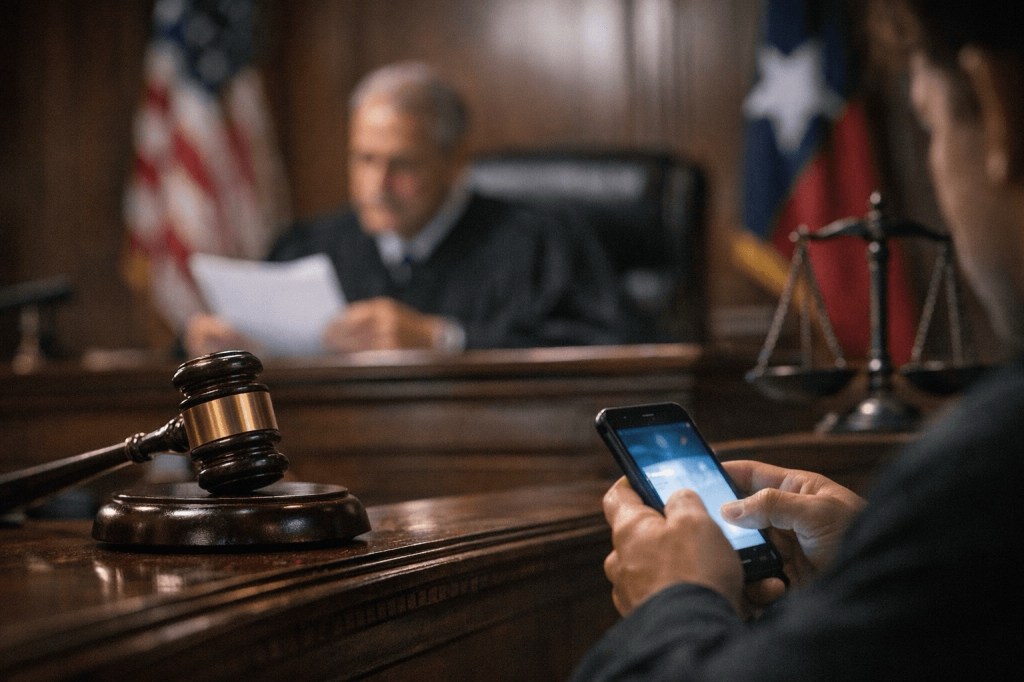
A federal judge has temporarily blocked a new Texas law aimed at restricting children’s access to mobile app stores, setting up another high-profile clash between state lawmakers, the tech industry, and the courts over how far government should go in regulating online life.
On December 23, U.S. District Judge Robert Pitman issued a preliminary injunction stopping Senate Bill 2420 — known as the App Store Accountability Act — from taking effect on January 1, 2026. The ruling came just days before the law was set to roll out statewide.
What the Law Would Have Done
SB 2420, signed into law in May by Greg Abbott, required app stores and developers to verify users’ ages and obtain parental consent before minors could download apps or make in-app purchases. Developers would also have been required to assign age ratings and explain how those ratings were determined.
Supporters, led by bill author Angela Paxton, argued the law would give parents “common sense tools” to protect children from harmful content, predatory behavior, and addictive app design — concerns widely shared across the political spectrum.
Why the Court Blocked It
Judge Pitman ruled that the law likely violates the First Amendment, calling it both “exceedingly overbroad” and “unconstitutionally vague.” In a widely cited analogy, he compared the statute to requiring age checks and parental permission before anyone could enter a bookstore or buy a book.
The court held that while protecting children is a compelling state interest, SB 2420 failed strict scrutiny because it restricted access to a vast range of protected speech — from educational and religious apps to news, fitness, and productivity tools.
Notably, Pitman distinguished the app store law from Texas’s narrower 2023 age-verification requirement for pornography websites, which was upheld by the U.S. Supreme Court because it targeted unprotected obscene content rather than broad categories of speech.
A Divided Right-of-Center Response
While many headlines frame the injunction as a clear win for Big Tech and free speech advocates, reaction on the center right is more complicated.
Some conservatives view the ruling as another example of federal courts undermining state authority and parental priorities. Texas lawmakers have spent years pressing tech companies to take child safety more seriously, arguing voluntary tools offered by Apple and Google often fall short.
At the same time, libertarian-leaning conservatives and free-market advocates warned long before passage that SB 2420 went too far. Mandating universal age verification for all apps — including benign ones — raised privacy concerns about mass ID collection and risked substituting state judgment for parental discretion. Groups such as Texas Policy Research and the R Street Institute criticized the bill as government overreach rather than genuine parental empowerment.
This internal tension reflects a broader challenge for conservatives: how to protect children online without creating expansive regulatory regimes that infringe on speech, privacy, and market innovation.
What Comes Next
The injunction blocks enforcement statewide while the lawsuits proceed. Texas officials have not yet formally announced an appeal, but most legal observers expect the case to head to the Fifth Circuit Court of Appeals.
Meanwhile, SB 2420 joins a growing list of Texas tech regulations caught in legal limbo, including the state’s 2023 social media law for minors, which has also faced repeated court blocks.
The outcome could have national implications. Similar “app store accountability” laws are being proposed or tested in other states, and a higher-court ruling could determine how far states can go in reshaping the digital ecosystem in the name of child safety.
For now, the decision underscores a hard truth in digital policy: protecting kids online may be a shared goal, but how to do it without trampling constitutional limits remains an unresolved — and deeply contested — question.
 Texas Bay News
Leave a comment